
5G FWA Extension
Share one 5G FWA link across an MDU
Distribute gigabit and multi-gigabit broadband services to apartments over the existing coaxial network.
5G fixed wireless access can provide high-capacity broadband without extending a new wired access network to every property. Higher-frequency 5G, particularly mmWave, offers substantial capacity but has limited ability to penetrate façades, coated windows, internal walls and floor slabs.
This creates a challenge in multi-dwelling units. Installing a separate FWA modem in every apartment can result in inconsistent radio conditions and complex installations, while rewiring the property with new fiber or Ethernet adds time, cost and disruption.
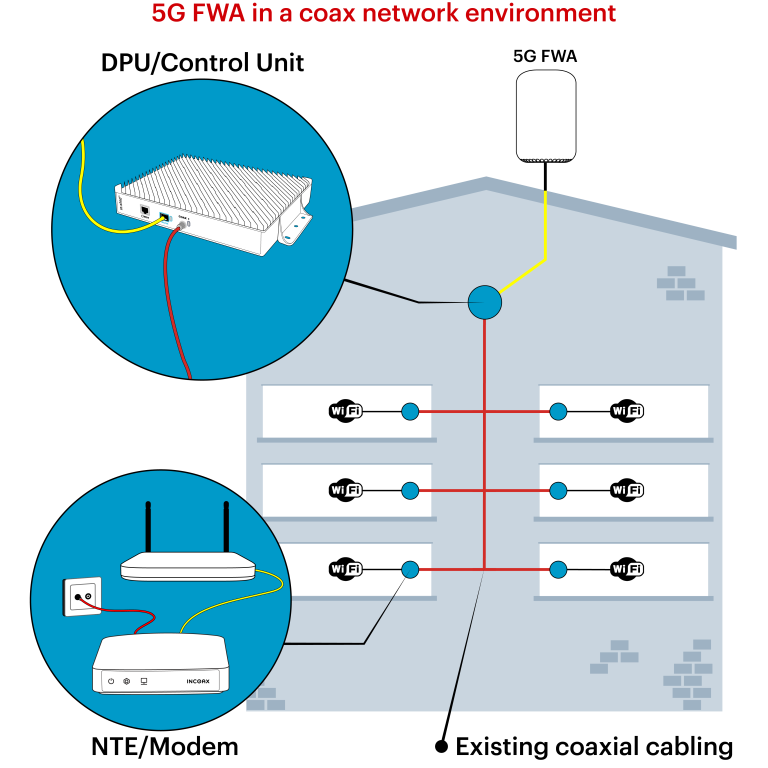
Broadband Forum TR-507 defines a multi-tenant FWA architecture in which one shared 5G FWA connection can serve multiple subscribers within a building. The FWA modem is installed at a suitable location, typically on the roof or exterior wall, where strong radio conditions can be established.
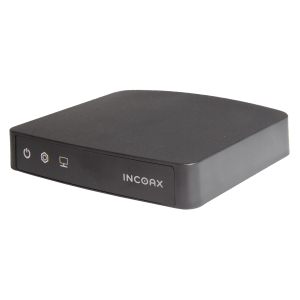
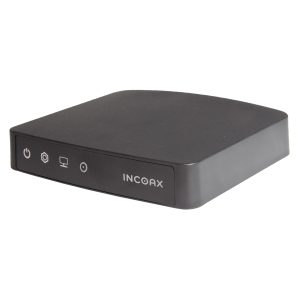
An InCoax DPU then distributes the broadband connection over the existing in-building coaxial network. In each apartment, an InCoax NTE provides an Ethernet connection to the residential gateway.
This replaces multiple apartment-level FWA installations with one engineered building-level connection. It enables operators to reach subscribers throughout the property while reducing new cabling, installation work and resident disruption.
TR-507 supports both AGF-based and BNG-based subscriber-management architectures and allows the mobile network, broadband service and in-building infrastructure to be operated by the same or different providers.
KEY ADVANTAGES
Shared building-level connection
Use one high-capacity 5G FWA link to serve multiple subscribers in an MDU.
Existing in-building infrastructure
Reuse suitable coaxial networks and coexist with existing TV services, avoiding extensive recabling.
Faster deployment
Reduce installation work and disruption while activating subscribers and generating revenue sooner.
High-performance distribution
Deliver reliable, low-latency gigabit and multi-gigabit connectivity over MoCA Access 2.5, subject to the capacity of the shared FWA link.
Standards-based architecture
Support the Broadband Forum TR-507 architecture with AGF-based or BNG-based subscriber management.
Flexible network evolution
Begin with 5G FWA and later replace the building-level connection with fiber while retaining the same coaxial distribution network.
Flexible operator models
Support different arrangements between mobile operators, fixed broadband providers and in-building network operators.
How it works
A 5G FWA modem is installed on the exterior wall or roof of the building, where suitable sub-6 GHz or mmWave radio conditions can be established. The modem terminates the 3GPP wireless link and connects to an InCoax DPU at the building access point.
The DPU distributes the broadband connection over the existing in-building coaxial network using MoCA Access 2.5. InCoax NTEs, typically installed in each apartment, provide an Ethernet connection to the residential gateway.
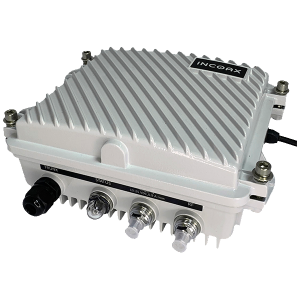
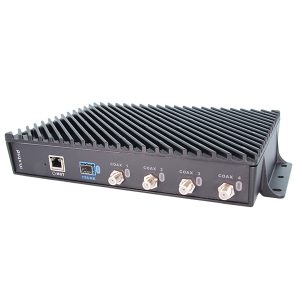
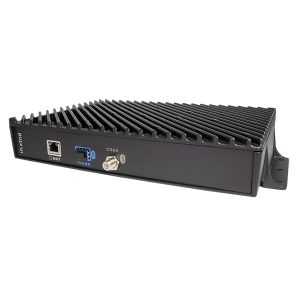
The solution supports both point-to-multipoint and point-to-point coaxial topologies. Depending on the building, the DPU can be installed in a basement, electrical riser, floor cabinet, technical room or attic.
The architecture is aligned with Broadband Forum TR-507 for multi-tenant FWA. It can support AGF-based integration with a 5G residential gateway, adaptive AGF integration with a fixed-network residential gateway, or conventional BNG-based subscriber management.
In each architecture, the InCoax DPU and NTEs act as an access extension between the building-level FWA connection and individual subscribers. The coaxial segment carries subscriber traffic transparently while maintaining the service and subscriber separation defined by the operator network.
Soft-GRE integration
Where required by the operator architecture, Soft-GRE tunnels can be used between the building access equipment and the AGF or BNG.
Ethernet traffic is encapsulated for transport through the access network and decapsulated at the receiving endpoint. Subscriber management, policy control and service enforcement remain within the AGF or BNG.
This allows the InCoax access extension to fit into established broadband control, OSS and BSS environments without moving subscriber intelligence into the in-building coaxial network.
How it is managed
InCoax Manage provides centralized management of DPUs and NTEs. Service profiles define how the DPU adds, removes or rewrites VLAN tags on subscriber traffic before Soft-GRE encapsulation so that the AGF or BNG receives the correct Layer 2 service and subscriber information. Soft-GRE parameters such as IP addresses and tunnel identifiers are either con-figured by the InCoax Manage for the DPU or by the 5G network when Soft-GRE is terminated in the FWA modem.
InCoax Manage supports NETCONF/YANG, SOAP-XML and CLI, enabling automation, OSS integration and operation of the FWA extension as part of the existing fixed access domain.
System overview at a glance
- Based on BBF TR-507 multi-tenant FWA architecture with AGF direct, AGF adaptive and BNG options.
- MoCA Access 2.5 in-building distribution over existing coax, with indoor and outdoor DPU variants.
- Uses available spectrum in the coax network and co-exists with existing services.
- Supports multiple FWA operators on the same coax plant using logical separation such as VLANs and tunnels.
- Can be combined with fiber deployments, using the same in-building coax platform for 5G FWA.
Main products

Contact us
We’re always happy to hear from you
Email us or fill out the form, and we’ll get back as soon as we can.
Email: sales@incoax.com
Having troubles with an InCoax product or solutions?
Let us help with techsupport
Please note all the product information is available in our resources section.
